


Blog Posts
LLM Optimization Strategies Every Brand Should Know in 2026
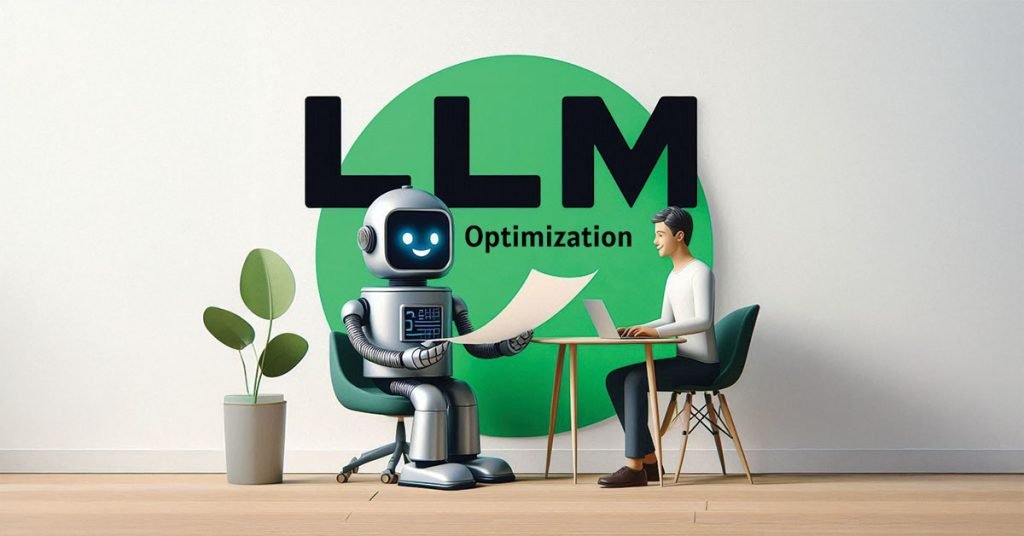
The year 2026 will be a significant tipping point in the online brand discovery journey. Traditional SEO is no longer enough to be found because we are now in the era of LLM Optimization (LLMO). Now, large language models (LLMs) like ChatGPT, Gemini, Claude, and Perplexity are the new pathways to information. Rather than search engines just serving up a list of links (SERPs), users are asking AI for direct, conversational answers; these conversational AI assistants now power:
Generative Search – natural-language answers presented to users (e.g., AI Overviews).
Conversational Search – interactive dialogue with AI (e.g., ChatGPT, Google AI Mode).
If your brand is not optimized for how LLMs think, retrieve, and generate responses, you may become an unseen part of the new AI-driven digital experience.
In this guide, we will outline the LLM optimization methodologies your brand needs to implement in 2026.
Table of Contents
- What Is LLM Optimization (LLMO)?
2. Why LLM Optimization Matters
3.How to Do LLM Optimization
- Understand How LLMs Retrieve and Rank Information
- Create Content That Feeds the AI Pipeline
- Focus on Semantic SEO
- Strengthen Brand Mentions Across the Web
- Optimize for Conversational Context
- Keep Your Data AI-Readable
- Build AI-Friendly Authority Through Content Depth
- Experiment With AI Feedback Loops
- Make Your Content Accessible to LLMs
- Incorporate Image & Video Content
- Tailor Content to Target Audiences
4.Conclusion
5.FAQs
What Is LLM Optimization (LLMO)?
LLM Optimization (LLMO) is a contemporary marketing tactic that helps ensure your brand is mentioned more often and more appropriately, in AI-generated responses from platforms like ChatGPT, Google AI Overviews, Gemini, and Claude.
Key Approaches Include:
Achieving positive brand mentions on high-authority websites
Writing original, accurate, LLM-friendly content
Developing strong EEAT (Experience, Expertise, Authoritativeness, Trustworthiness) footprint
LLMO is Similar to SEO, but its purpose is not the same.
Why LLM Optimization Matters
AI tools are the main method through which users are sourcing information today.
Users would prefer to receive a conversational answer to their question, rather than sift through a list of search results.
Essentially, large language models are drawing their answers from trusted data sources, and what we could consider authoritative content.
The brands that large language models respond to will prevail in digital visibility.
If you aren’t optimized for large language models, risk disappearing from the AI generated answers, even though you continue to rank on Google.
How to Do LLM Optimization
1. Understand How LLMs Retrieve and Rank Information
Unlike Google Search, LLMs do not crawl the web in real time. Rather, they pull data from trained datasets, connected APIs, and verified sources. But more and more, models rely on retrieval-augmented generation, or RAG, which pulls live data from trusted websites.
What This Means for You:
Ensure that the information on your website is structured, factual, and current.
Focus on EEAT signals: Experience, Expertise, Authoritativeness, and Trustworthiness.
Consider publishing clear, well-referenced information that LLMs easily understand and can reuse.
2. Create Content That Feeds the AI Pipeline
LLMs are trained on high-quality data, not keyword saturation. Your brand’s visibility is due to how your content flows into the model’s knowledge graph.
Strategy Advice:
Directly answer questions. Think about creating content that is Q & A-style, and resembles natural language questions.
Break down complex topics. LLM’s prefer clarity and concise answers when it comes to complex topics.
Publish across multiple formats: blog articles, FAQ pages, podcasts, YouTube transcripts – LLMs take in every form of content.
3. Focus on Semantic SEO, Not Just Keywords
LLM optimization does not rely on an exact word match, but rather on conveying meaning. AI models seek semantic relationships-context, tone, and relevance.
How to Optimize:
Use topic clusters to connect related content.
Include entity-based SEO (people, brands, products, locations).
Add contextual internal links that strengthen your site’s knowledge network.
In short, think of your website as a mini knowledge base, not just a list of pages.
4. Strengthen Brand Mentions Across the Web
AI models develop brand associations from the frequency and placement of mentions of your brand. This doesn’t necessarily mean that you rank #1 in Google, but it means that strong brand signals across authoritative platforms make AI trust your business.
Action Points:
Get mentions on authoritative websites, news portals, forums, and review platforms.
Collaborate with industry experts and creators for backlinks and citations.
Consistent NAP (Name, Address, Phone) across the web and consistent tone as well.
Remember: in 2026, LLMs don’t “search” , they recall. Your goal is to be the brand they remember.
5. Optimize for Conversational Context
Individuals engage with AI assistants in a more conversational style than they enter information into search bars, using longer prompts that are more natural to a verbal chi. Your writing needs to embrace a tone that reflects this style of conversation.
Here are some practical tips for writing content that can be used in LLM experiences:
Write in a human-like style that reflects a dialogue.
Include an FAQ section that reflects actual user questions.
Provide use cases, scenarios, and examples that help LLMs give more contextual answers.
6. Keep Your Data AI-Readable
To guarantee that your information is accurately interpreted by AI tools and APIs:
Leverage schema markup (FAQ, product, and organization schema).
Keep your metadata, titles, and alt text concise.
Build your website as a fast, mobile-friendly, AI-tool indexable modern site.
This technical layer is the digital handshake between your brand and AI systems.
7. Build AI-Friendly Authority Through Content Depth
In 2026, superficial blog posts won’t cut it. LLMs like depth and consistency; they want content that reflects topical competence over time.
Do This:
Publish pillar articles: in-depth, evergreen guides.
Link them to supporting posts where subtopics are expanded on.
Add author bios that include credentials and expertise.
Consider your content as part of a long-term AI learning ecosystem, not just another marketing tactic.
8. Experiment with AI Feedback Loops
Some sophisticated brands will now utilize AI prompt feedback – testing or exploring what their brand looks like with ChatGPT, Perplexity, or Gemini.
By observing how LLMs describe your business, you will be able to:
Spot content gaps.
Identify which sources AI will trust. .
Modify messaging because you know it will impact future AI outputs.
In essence, treat AI tools as your new SEO dashboard.
9. Make Your Content Accessible to LLMs
Your content should be publicly available and easily crawlable.
Technical Checklist:
Use server-side rendering
Avoid paywalls
Follow indexation best practices
Proposed llms.txt standards may come later, but aren’t widely adopted yet.
10. Incorporate Image and Video Content
Multimodal LLMs include visuals in their analysis to boost the visibility of your content.
Why It Matters:
Visuals enhance contextual richness.
AI Mode tools analyze images
AI Overviews often display images Always provide descriptive alt text and captions.
11. Tailor Content to Target Audiences
AI models give personalized recommendations.
The clearer your audience targeting, the more often AI tools will show your brand to relevant users.
Conclusion
With the evolution of AI influencing the way information is discovered, the next evolution of digital marketing is LLM Optimization, which goes beyond traditional SEO. By creating high-quality, trustworthy, and authoritative content, and ensuring your brand appears across credible online sources, a digital marketing agency in Kochi can help you maintain strong visibility in a world dominated by generative and conversational search. In 2026 and beyond, success will be in the hands of brands that LLMs can trust, remember, and recommend.
Ready to Optimize Your Brand for AI-Powered Search in 2026?
F.A.Q.
Definitely not, SEO has not lost its importance yet. LLMO cooperates with SEO and makes the content more visible in AI search tools, such as ChatGPT and Google AI Overviews.
Early improvements can be seen within 2-3 months, however, strong LLM trust signals will usually be present after 6-12 months.
Not really. It’s beneficial to have technical SEO skills, however, the majority of the initial LLMO results come from enhancing content quality, brand mentions, and semantic structure.
Author

Rabboni Digital Marketing, a leading digital marketing company in Kochi, Kerala, empowers businesses to unlock their online potential. We offer a comprehensive suite of services including social media marketing, Google and YouTube advertising, content marketing, and SEO, all tailored to your specific needs.
